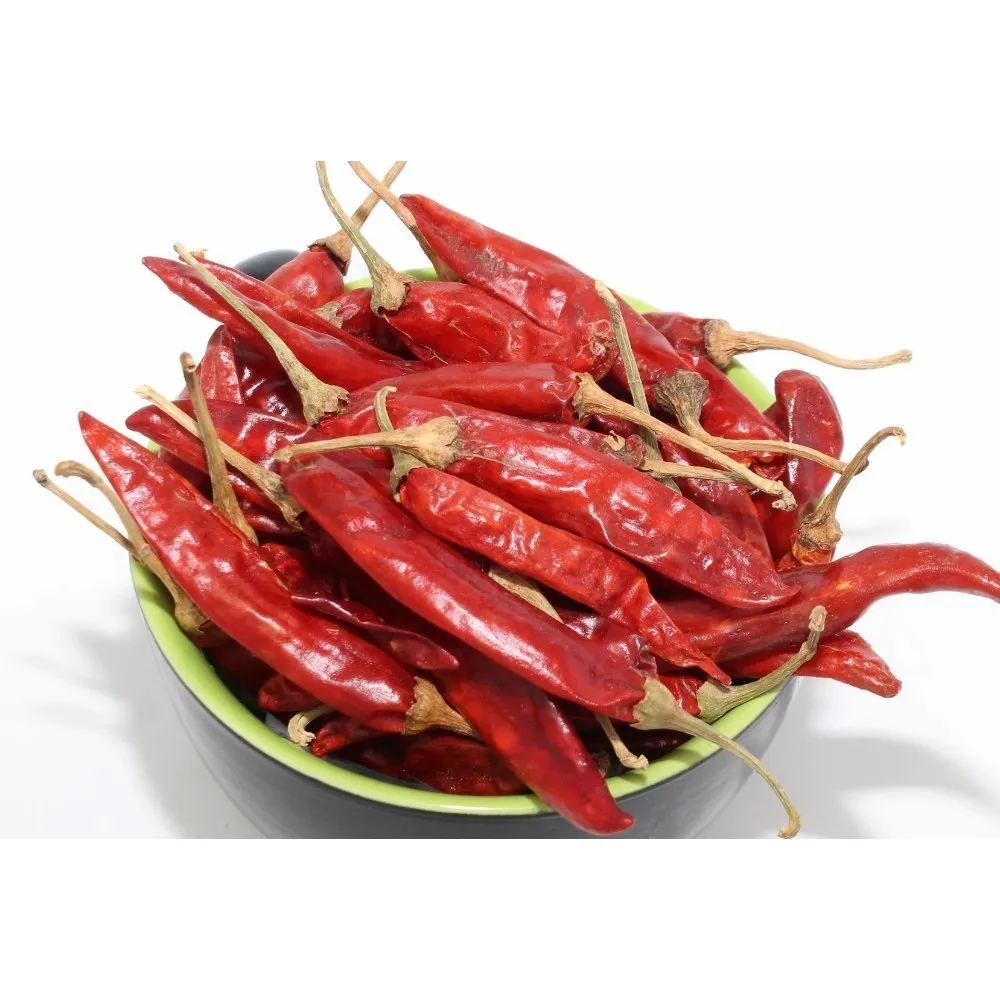
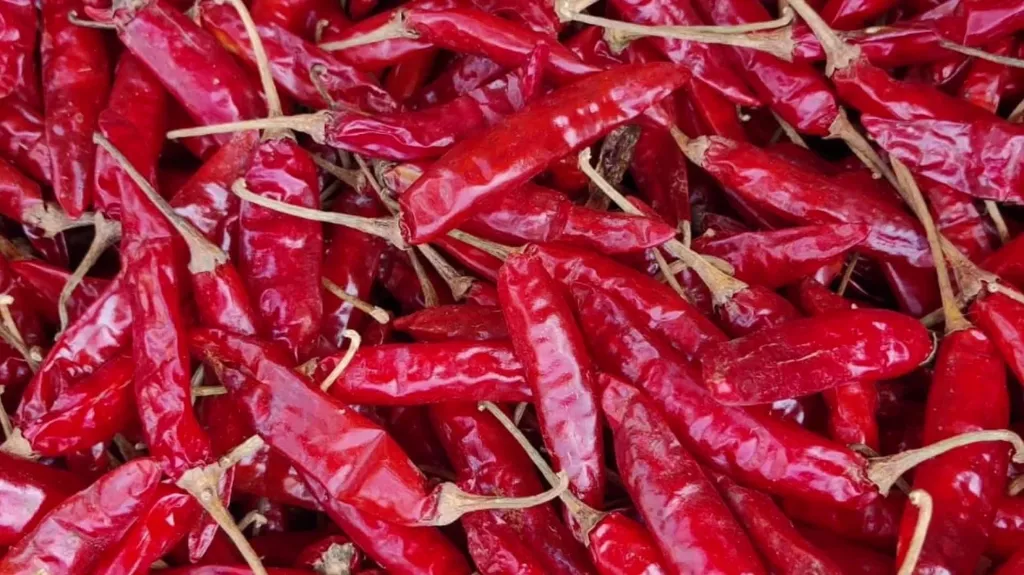
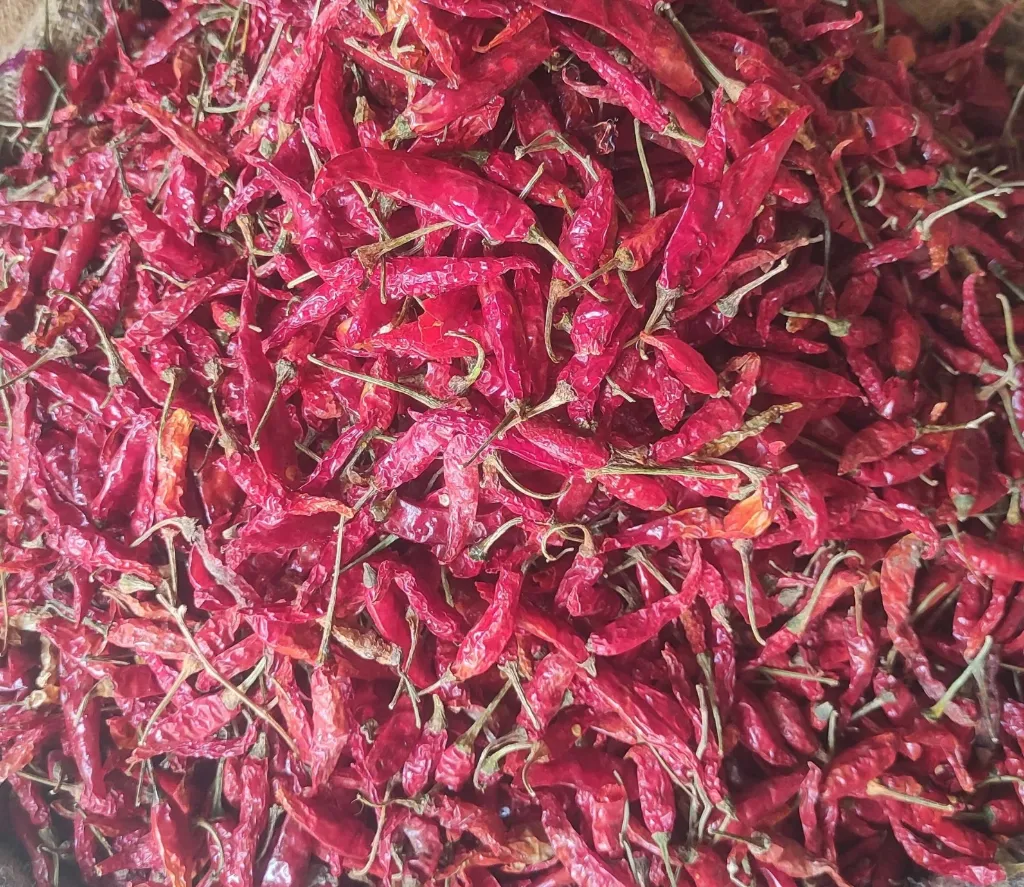
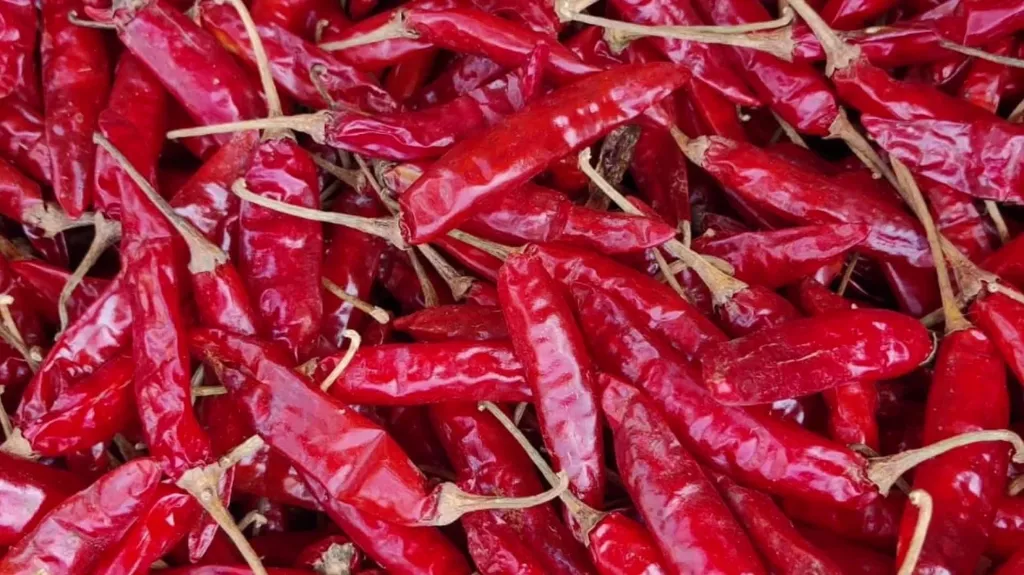
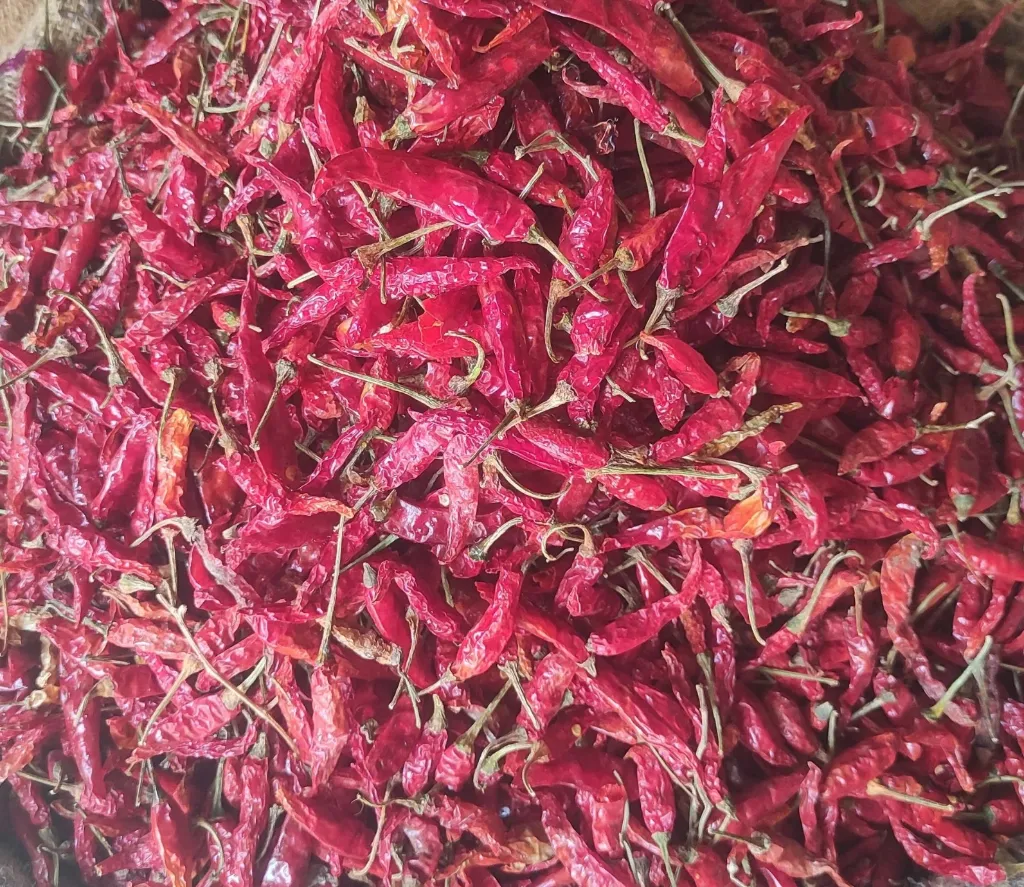
🔸 Product Name: Dry Red Chilies (Whole)
🔬 Botanical Name: Capsicum annuum, Capsicum frutescens
📦 HS Code: 09042110
🌍 Origin: India
🧪 General Specifications:
- Purity: 98%, 99%, or 99.5%
- Moisture: Max 12%
- Admixture: Max 2%
- Foreign Matter: Max 1–2%
- Damaged Pods: Max 3%
- Loose Seeds: Max 2%
- Mould/Infestation: Absent
- Shelf Life: 12–18 months (cool, dry storage)
- Packaging: 25–50 kg PP, jute, or paper bags (customizable)
🌶️ Major Export Varieties (with SHU & ASTA Values)
Teja Chilli (S17):
Internationally called Teja Chilli, this is among the spiciest commercial Indian chilies, with a pungency of 50,000–100,000 SHU and ASTA color value of 30–50. It is deep red in color and widely used in hot sauces, crushed chilli products, and oleoresin extraction.
Sannam S4 (334):
Also known globally as Sannam Chilli or S4 Chilli, it offers a balanced pungency of 30,000–50,000 SHU and a bright red color with ASTA value 50–70. This is one of the most exported varieties used in chilli powder and spice mixes.
Byadgi Chilli (KDL):
Byadgi, called KDL Chilli internationally, is a wrinkled variety famous for its high color value (ASTA 100–160) and low pungency (8,000–15,000 SHU). Ideal for color extraction and mild-taste preparations.
273 Wrinkle Chilli:
This variety is recognized by its wrinkled appearance and moderate heat of 30,000–50,000 SHU, with ASTA values ranging between 60–80. It is ideal for producing dry chilli flakes and coarse powders.
Mundu Chilli:
Commonly referred to as Round Chilli, this small, round variety has mild heat (10,000–15,000 SHU) and ASTA color value of 50–60. It is valued for its distinct aroma and traditional use in South Indian cooking.
Kashmiri Chilli (Kashmiri Mirch):
Renowned for its vibrant red hue and mild pungency (1,000–3,000 SHU), it has a high ASTA color value of 100–140. Often used in tandoori preparations and gravies for color enhancement.
Dhani or Bird Eye Chilli:
This small, bullet-shaped chilli is known for intense heat levels (100,000–140,000 SHU) and a color value of around 30–40 ASTA. It’s used in hot sauces, spice oils, and pickling.
Resham Patti Chilli:
Known for both good color (ASTA 50–80) and medium heat (20,000–40,000 SHU), it is popular in North Indian households and masala manufacturers.
Guntur Chilli (LCA 334):
Named after the region of Guntur, this variety offers 30,000–60,000 SHU with a deep red hue and ASTA range of 50–80. One of the most exported and stable-quality chilies from India.
Mathania Chilli:
A premium variety from Rajasthan, known for its aromatic character and medium color value (ASTA 40–60) with very low pungency (3,000–5,000 SHU). Highly prized in traditional North Indian cuisine.
Bhoot Jolokia (Ghost Pepper):
Recognized worldwide as Ghost Pepper, this is one of the hottest chilies on the planet with SHU levels reaching 800,000–1,041,000 and color value ASTA 20–40. Used in extreme heat products and defense sprays.
Naga King Chilli (Naga Morich):
Another extremely pungent chilli from Northeast India, it ranges between 700,000–900,000 SHU with ASTA values of 25–40. Exported for ultra-spicy condiments and sauces.
🌍 Special Notes for International Buyers:
- ASTA Color Value: Important for food colorant buyers — Byadgi and Kashmiri are top picks.
- High SHU Needs: For hot sauces or oleoresin extraction, go with Teja, Dhani, or Bhoot Jolokia.
- Balanced Use: For balanced flavor, color, and aroma — Sannam, Guntur, and 273 Wrinkle are versatile.
- Regional Preference: Mundu (South Indian cuisines), Mathania (North Indian gravies), Kashmiri (pan-Asian dishes).
🌐 Applications:
- Food Processing: Curries, sauces, spice blends, pickles
- Color Extraction: Paprika color and oleoresin (Byadgi, Kashmiri)
- Pungency Use: Hot sauces, extracts (Teja, Bhoot Jolokia)
- Traditional Cooking: Mundu, Resham Patti, Sannam
- Industrial Use: Cosmetic colorants, defense sprays (Ghost Pepper)